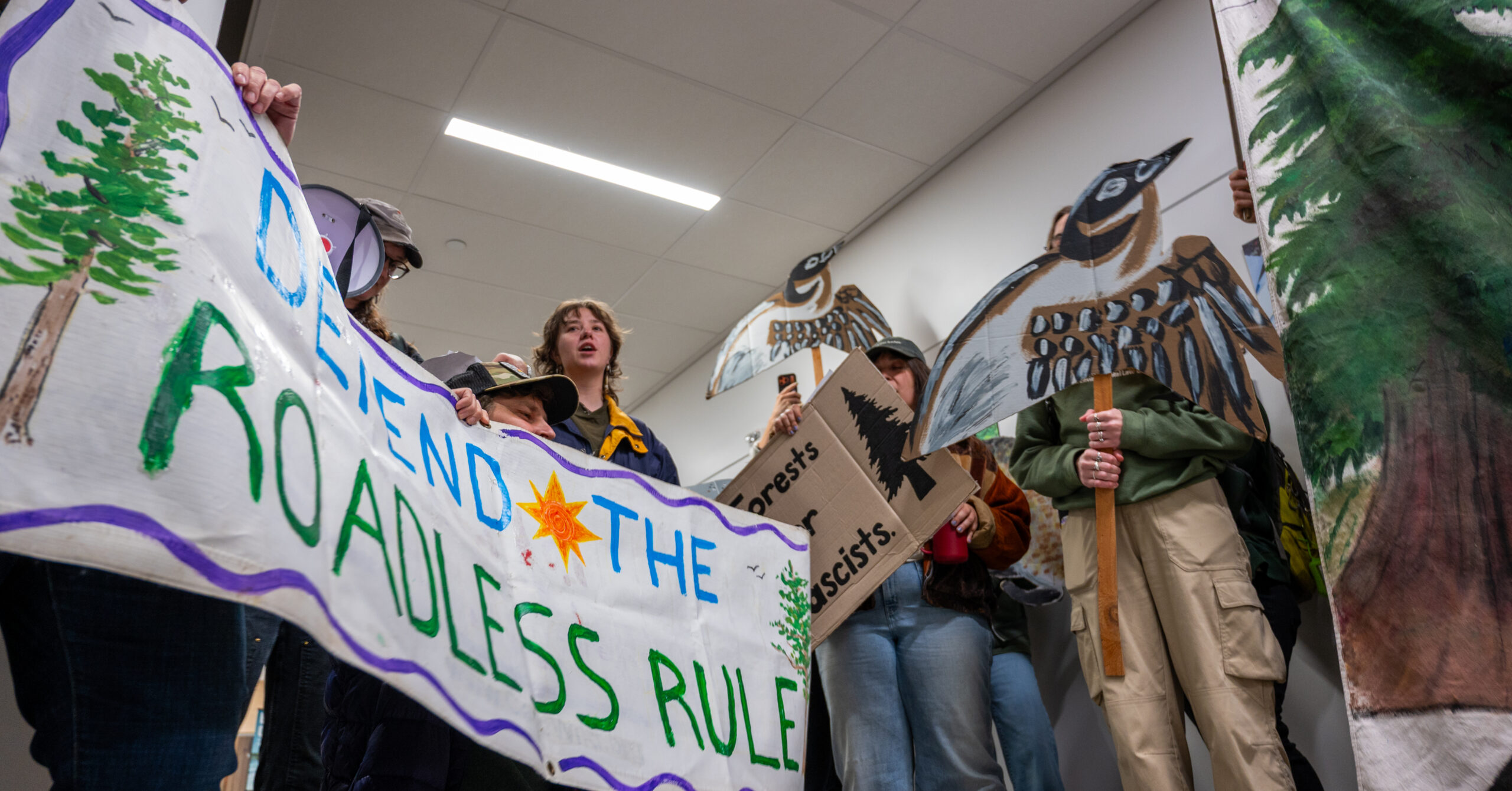
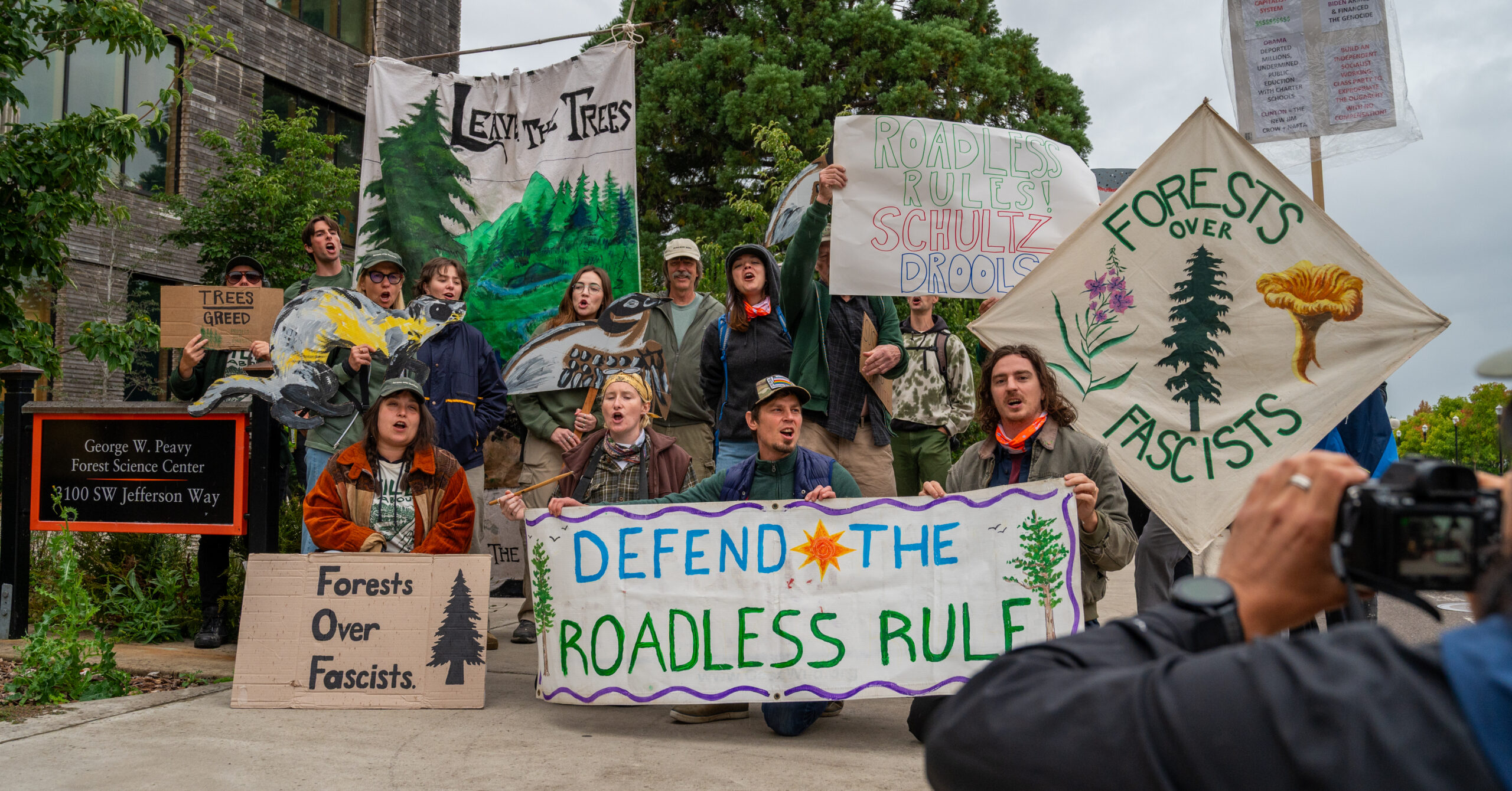
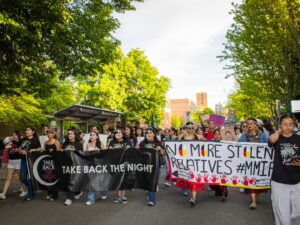
CORVALLIS, Ore., Sept. 2 — Forest defenders stormed a U.S. Forest Service research summit at Oregon State University today to call on USFS Chief Tom Schultz—who was in attendance—to reverse the Trump administration’s decision to repeal the “roadless rule,” a landmark protection for old-growth forests over the past two decades.
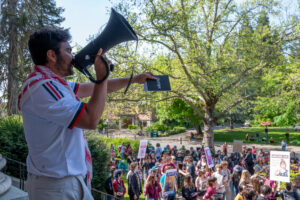
Jack Dodson, a rising senior at the University of Oregon and organizer with Climate Justice League, said folks came up today to “show Chief Schultz that he can’t show up in Oregon without expecting resistance for his efforts to repeal the roadless rule.”
Who’s this Schultz guy?
Trump-appointed Schultz earned controversy through his previous employment as a logging executive and volunteer board president of the Federal Forest Resource Coalition, a trade group representing companies that buy timber off federal land. When the roadless rule was first debated, he said in 2000 that the rule would make it ‘very difficult to actually generate revenue’ from land it covered.
So, defenders young and old packed themselves into the lobby of the George W. Peavy Forest Science Center at 8 a.m., where the “Science, Stewardship and Sustainable Forests: A Forest Service R&D Summit” was set to begin in 30 minutes—with Schultz scheduled for opening remarks at 9 a.m.
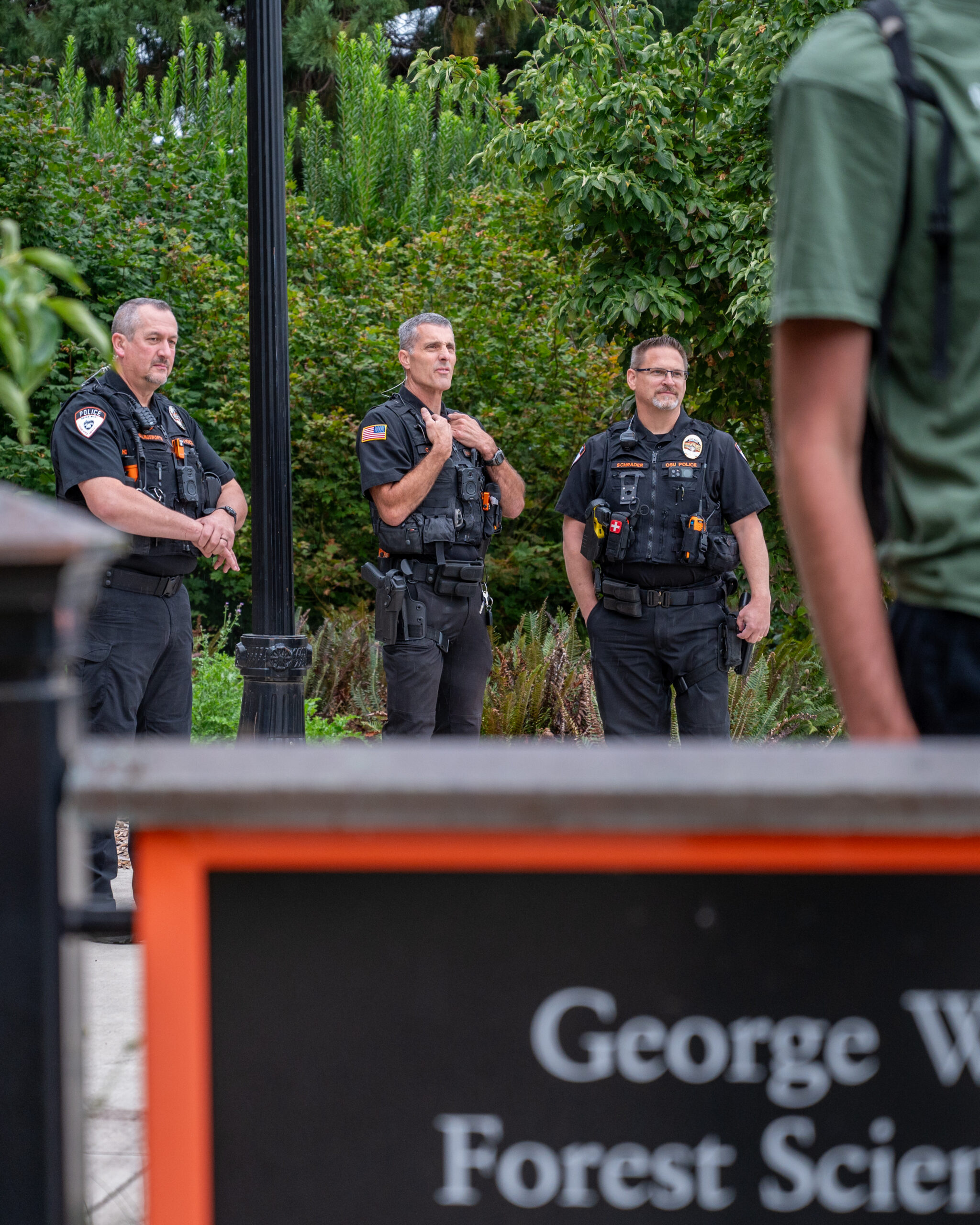
Within 15 minutes, defenders were forced outside. “They pushed us out and (said,) ‘Well, it’s a private event,’” Dodson said. “This is an event a public agency is putting on at a public university. You’d think there would be more reception.”
All roads lead to a closed door
The USFS has drawn criticism for the 21-day public comment period it gave the roadless rule repeal—by senators who asked for a 45-day comment period and a 120-day tribal consultation period, and by those who remember the initial 2001 ruling spanned two years, 1.6 million comments and 600 public meetings.
“We wouldn’t be here protesting if they—well, firstly, if they weren’t repealing the roadless rule—but also if they were doing this with more public input,” Dodson said.
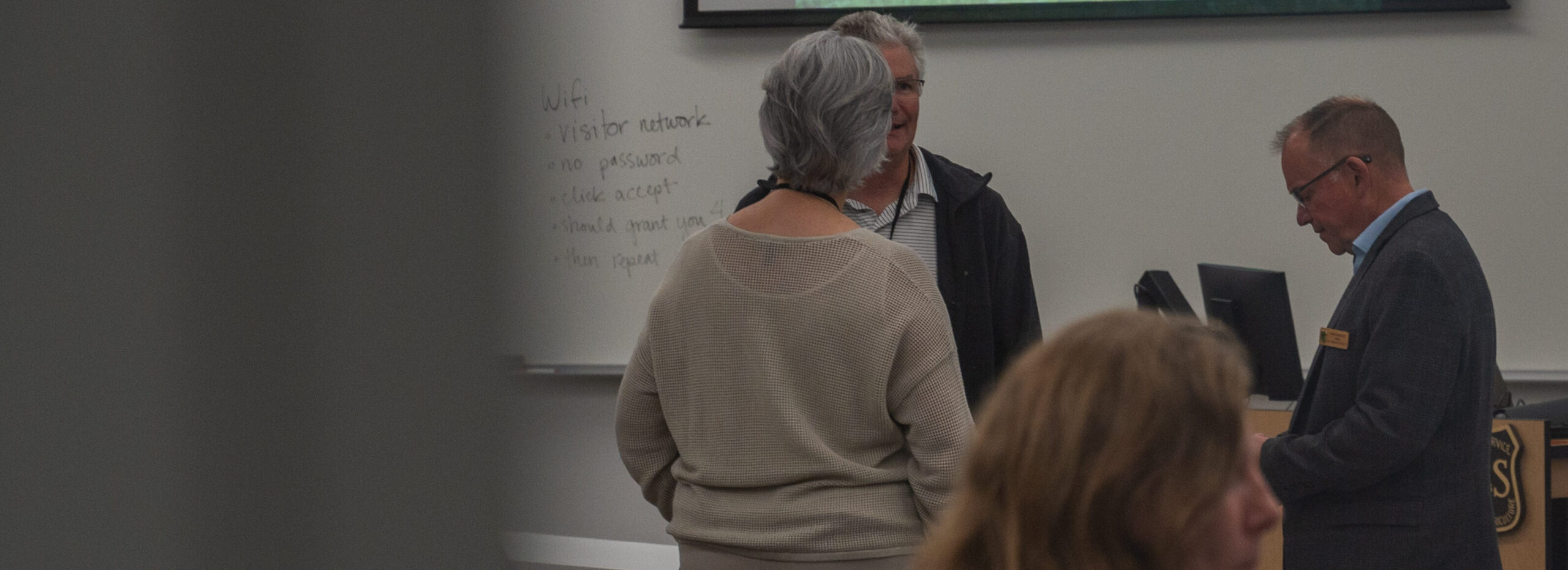
Andrea Brandon, a lead summit facilitator wearing a nametag that identified her as a program manager for Forest Service research and development, was one of a few event organizers who laid hands on forest defenders and me as we were ushered out of the building.
“We do have a process,” Brandon said after I asked to speak with the USFS. “If you email (the national press desk) right now, they will have a response to you within the hour.”
I emailed them at 10:51 a.m. and received an automated reply which said they aimed to respond “within two business days.” As such, the USFS could not be immediately reached for comment.
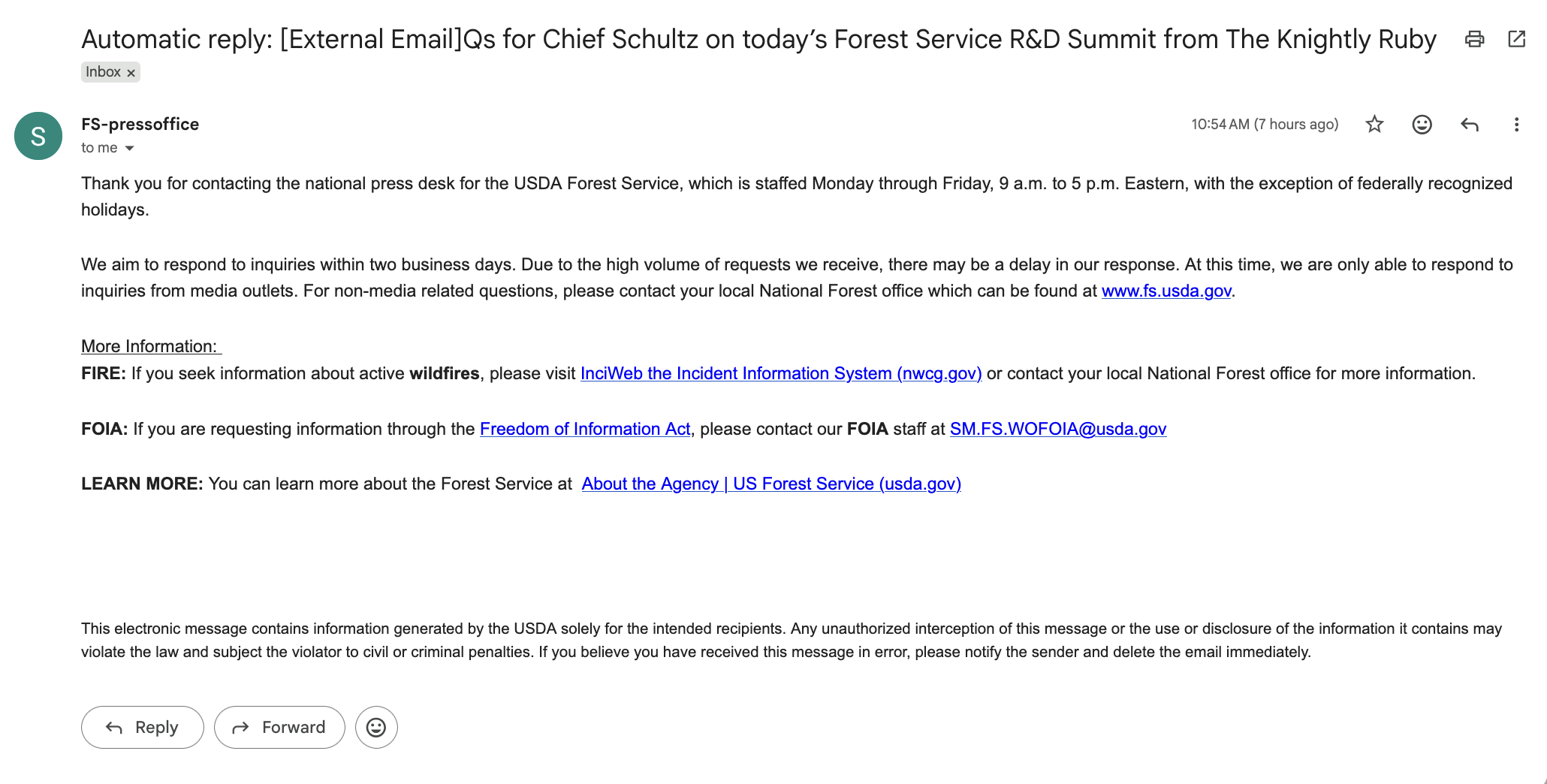
Brandon said the summit was “closed-door,” and sought to bring “partners together” to discuss research.
“We’re not talking about roadless (in this meeting.) We’re not talking about travel management,” Brandon said. “It is exclusively focused on the future of our nation’s programs.”
A blurry crystal ball for forests, workers alike
On that note: 57 of 77 USFS research stations are slated for closure and/or consolidation, including the 100-year-old Pacific Northwest Research Station headquarters in Portland.
The PNWRS will be clumped together with seven other shuttered regionals as a single research station in Fort Collins, Colorado, at the same time the USFS plans to move national headquarters to Salt Lake City, Utah.
Don’t worry: the USFS plans to open a Salem office, though hasn’t said “what (it) would look like, when it would open or who would lead it,” according to the Oregon Capital Chronicle.
The National Federation of Federal Employees, which represents USFS workers, estimates the relocation alone will affect 6,500 employees, and 2,700 specifically through research station closures. This comes a year after the USFS “shed 5,680 employees.”
I spoke off the record with a research worker at the summit who declined to comment publicly, they said, because they need to keep their already precarious job to feed their kids.
“(Workers are) being told to pick up their entire lives and move across the country, or move two to three hours away from their residence where they live now,” former Forest Service firefighter and current NFFE staff Steve Gutierrez told the Federal News Network.
“Not everybody can pick up their entire life, move their kids out of school, buy a new home in another state, sell their home,” Gutierrez said. “That’s a big lift for a lot of people, and not everybody’s willing to do that, no matter how much they are dedicated to the service.”
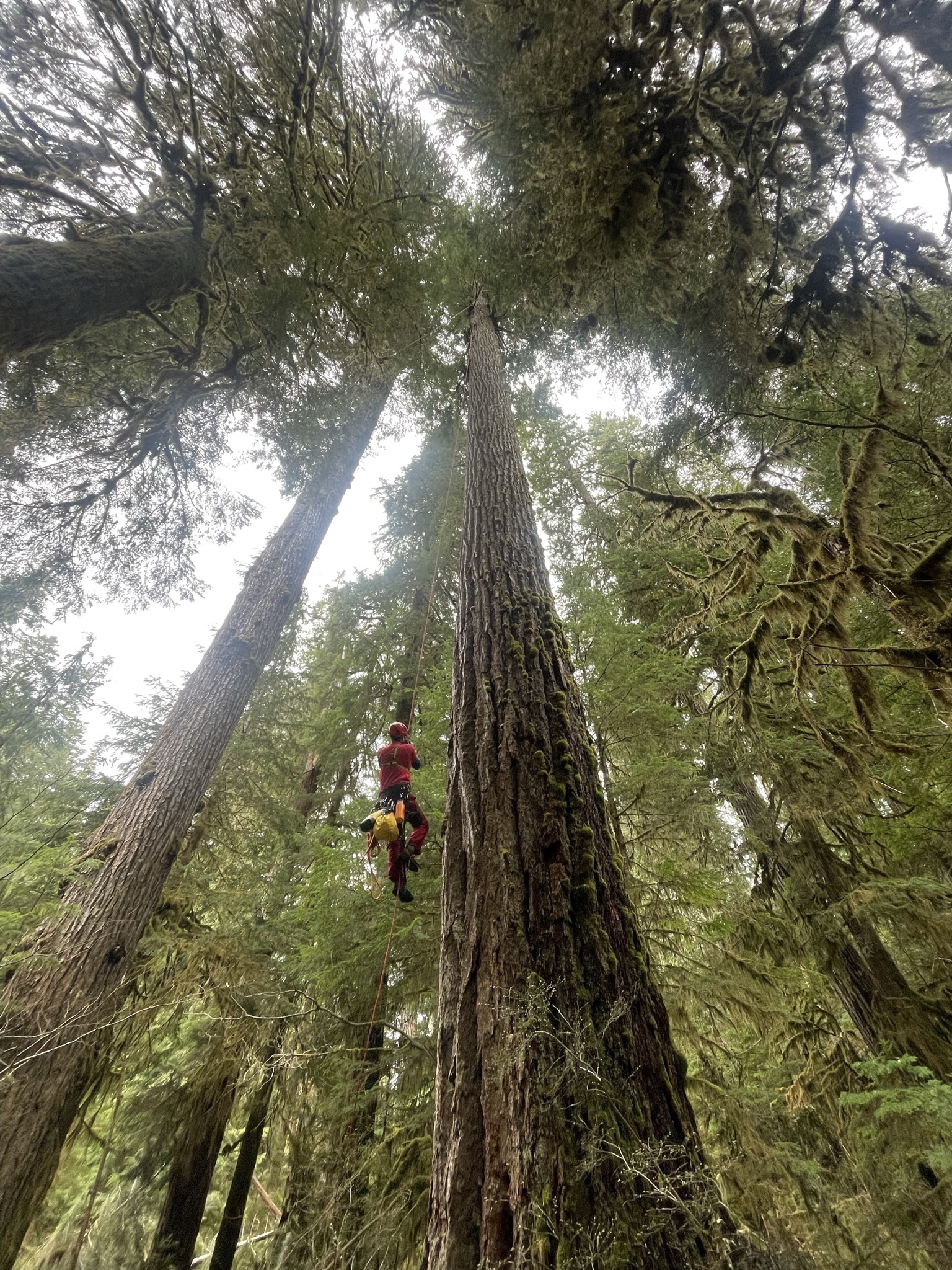
Too, not everyone can “put down” their research: cuts and consolidation threaten the livelihoods of long-term research in places like Oregon’s H.J. Andrews Experimental Forest, home to a 200-year log decomposition study launched in 1985 (we’ve got 159 years to go on that one).
“We’re here today to protest against the rescission of the roadless rule—that literally is just opening up more lands to logging,” Dodson said, “but it’s also (about) reducing the (USFS’) effectiveness, with (closing) research stations.”
“If (the USFS) didn’t want us to show up in the way we did (today), then they need to have more public engagement and transparency, but of course that’s not the point,” Dodson said. “The point is to sell off our public lands and log the last remaining old-growths of Oregon.”
Editor’s note: Since publishing, we’ve made minor grammatical fixes and photo layout changes for clarity and adherence to AP Style.



Be First to Comment